The Horses on the Mountain
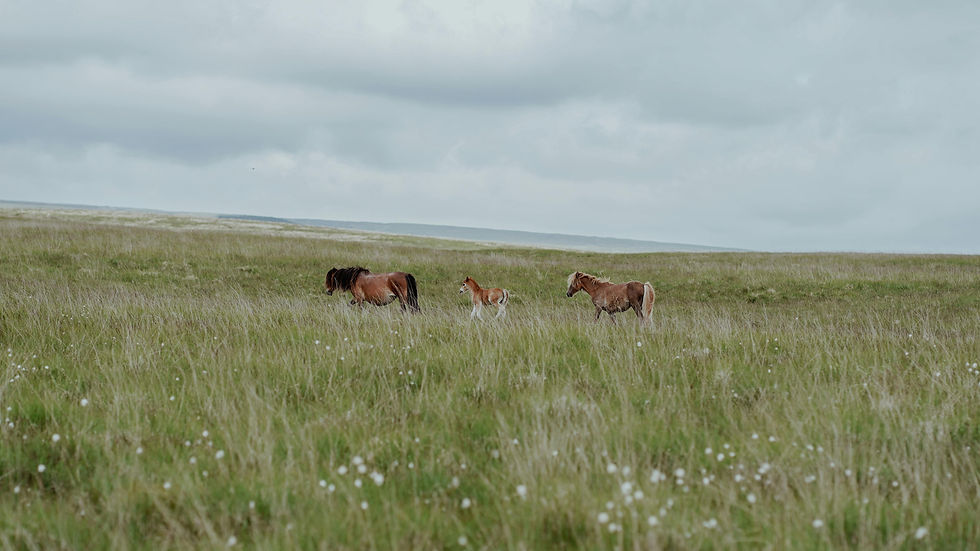
A mare stands on the mountain beside her sleeping foal.
She does not know that helicopters will soon cross the sky.
She does not know that people hundreds of kilometres away are debating whether she should be allowed to remain where she was born.
She only knows the quiet rhythm of the mountains.
The morning sun.
The familiar scent of her family.
The comfort of keeping her foal close.
The helicopter cannot tell one horse from another.
From above, they are simply numbers.
A target.
A management problem waiting to be solved.
But on the ground, the story looks very different.
A young colt stays close to the only family he has ever known. An old stallion watches over the band he has spent years protecting. To those who love brumbies, these are not anonymous animals scattered across a mountain. They are families. Individuals. Lives.
For generations, Australia's wild horses have roamed the high country, becoming woven into the landscape and into the hearts of countless Australians.
Today, many of those same horses face a very different future.
For those who love brumbies, the debate has never been about numbers.
It has always been about lives.
Many believe there are more humane ways to manage wild horse populations than aerial shooting, including trapping, rehoming, and fertility control. For the people who have spent years rescuing, rehabilitating, and rehoming brumbies, every horse is far more than a population estimate.
It is a life.
They see frightened mares learning to trust again. Young horses taking their first cautious steps into a new future. Families who discover that the so-called wild horse is gentle, intelligent, and deeply capable of forming lasting bonds with people.
These are the stories that rarely make the headlines.
What many horse lovers struggle to accept is not simply that horses are being removed from the mountains.
It is the manner in which many are lost.
Because once we begin looking at brumbies as individuals rather than statistics, the conversation changes.
A horse is no longer a management problem.
It is a living being trying to survive in the only home it has ever known.
These horses never asked to become symbols. They never asked to become a political debate. They simply wanted to live beneath the same open sky they had always known.
Perhaps that is why so many Australians continue to fight for them.
Because once you see a brumby as an individual, it becomes impossible to see the cull as just a number.